Database & ER diagram tool for easy data modeling and visualization
Build clear database diagrams with Cacoo that help streamline development projects
What is an entity relationship (ER) diagram?
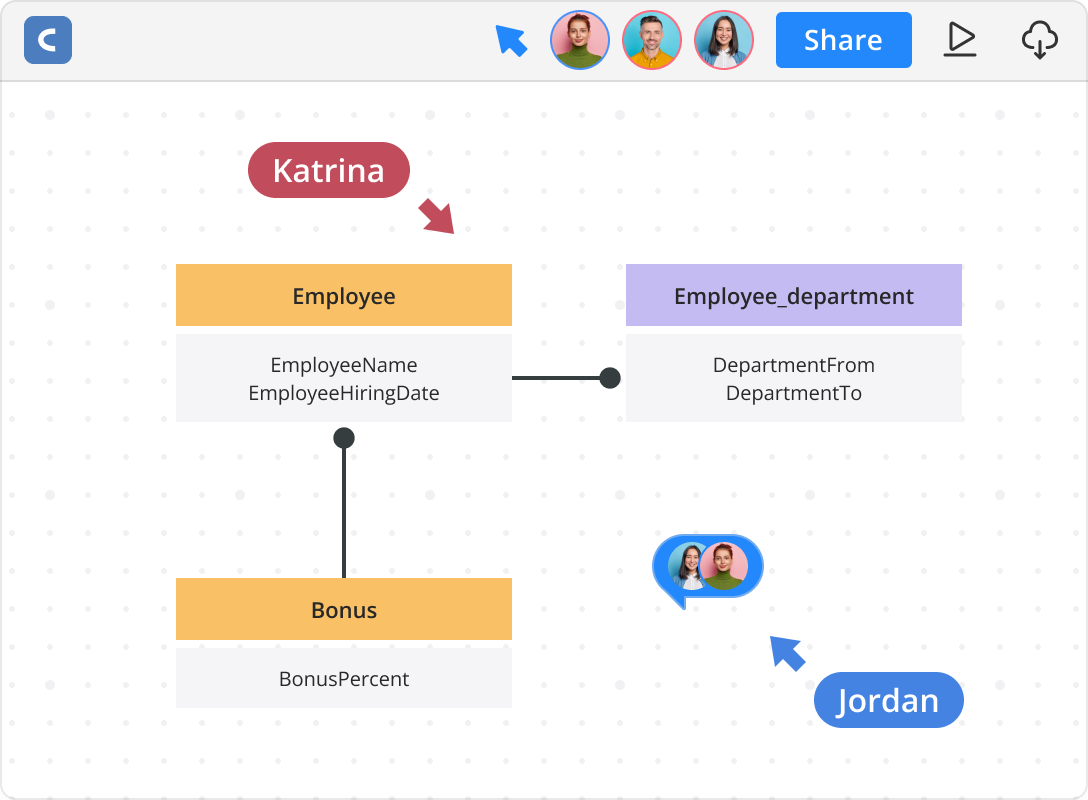
Try it free nowAn ER diagram is a type of flowchart that models the structure of a database. It illustrates entities (such as people, objects, or concepts), their attributes, and the relationships between them. ER diagrams help developers, analysts, and stakeholders design logical database architectures that ensure data integrity, normalization, and support for business workflows.
Types of database diagrams
UML diagrams come in various types, each designed to visualize a specific aspect of a system. Here are the most commonly used UML diagrams for software planning and documentation:

ER diagrams
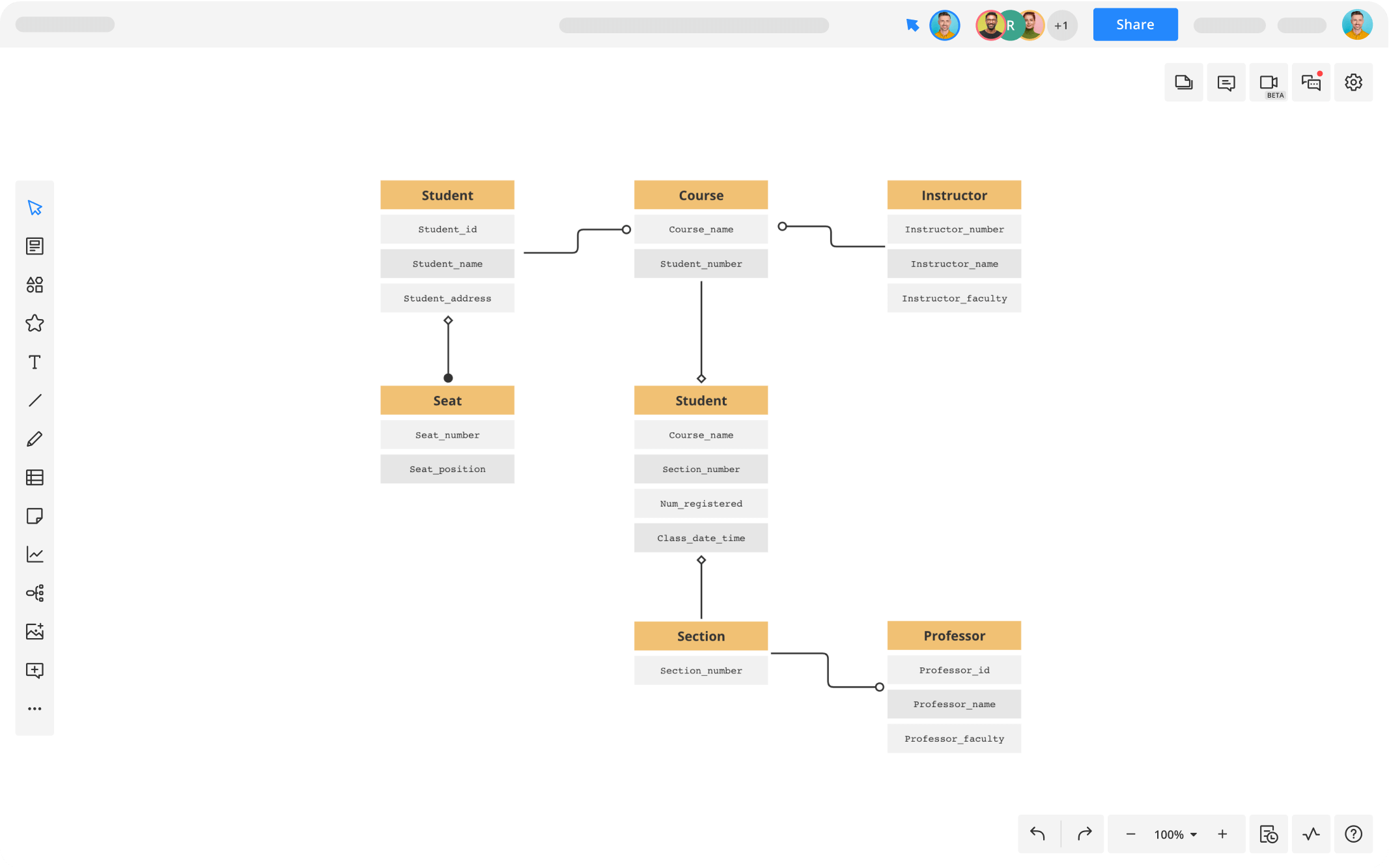
Define entities, attributes, and relationships to create logical data models.

Relational schema diagrams
Show how tables, keys, and constraints define a relational database's structure.

Object-oriented database diagrams
Include objects, classes, attributes, and inheritance used in OODBMS.

Physical database diagrams
Detail tables, data types, indexes, and constraints for implementation.
Who uses ER diagrams?

Use ERDs to model, optimize, and maintain relational structures.

Rely on ERDs to plan how application logic interacts with data layers.

Visualize data processes and clarify system requirements.

Reference ERDs to enforce system-wide consistency and plan integrations across distributed databases.
ER diagram vs EER diagram
Try it free nowWhile standard ER diagrams depict basic database elements, enhanced ER (EER) diagrams add more complexity and specificity. EER diagrams include constructs like subclasses, superclasses, and categories, supporting advanced data modeling through hierarchical relationships, generalization/specialization, and inheritance.
Why teams use database and ER diagrams

Design, debug, and refine complex data structures with clear, visual logic.

Understanding entity relationships at a glance allows teams to analyze, vet, and optimize database architecture.

Anticipate performance bottlenecks, data anomalies, or schema design flaws early in development.
Import your database schema directly
Auto-generate an ER diagram from your existing SQL-based schema using Cacoo’s Schema Importer. Supports common formats such as MySQL, PostgreSQL, and more.

It’s the fastest way to audit your current structure and collaborate on improvements.
Integrate with your favorite apps
Connect Nulab products with each other and with your favorite tools to build a seamless, end-to-end workflow


Try Cacoo for database and ER diagrams today

Model your data with clarity
Design and document your database architecture in Cacoo. Start free with full feature access.
Try it freeTRUSTED BY OVER 4 MILLION USERS WORLDWIDE




How teams use Cacoo to map out systems and improve infrastructure planning
IT teams and network engineers use Cacoo to document infrastructure, plan updates, and ensure systems stay secure and reliable. Here’s how Cacoo helps teams manage networks more effectively.
Read more"Cacoo offers just the right features that an Agile organization that wants flexibility needs."
Start making ER diagrams with Cacoo today
Design and document your databases with intuitive ER diagrams built for collaboration